Most people with gastritis are given a PPI and told to avoid spicy food. Neither addresses the inflammation that's actually damaging the lining. The 8 articles in this guide cover what gastritis is, what causes it, how the stomach repairs itself — and what the science says about supporting recovery.
Chronic gastritis — persistent inflammation of the stomach lining — is one of the most under-explained diagnoses in Indian gut health. In TumGard's survey, 24% of buyers who had an endoscopy received a confirmed gastritis diagnosis, and 86% had a clinically significant finding of some kind — only 5.8% came back normal. The primary driver in most cases was H. pylori infection, present in 62% of the same cohort. The 8 articles in this guide move from what gastritis actually is and how to recognise its symptoms, through the exact mechanism by which H. pylori causes and sustains mucosal inflammation, to what the stomach lining repair process requires — and what the peer-reviewed evidence says about supporting it.
Most people with gastritis are never told exactly what the diagnosis means. Their endoscopy report says "mild antral gastritis" and their doctor writes a PPI prescription. These two articles explain what the condition is biologically, and the symptom patterns that separate it from ordinary indigestion.
In India's endoscopy data, gastritis and H. pylori are not two separate problems — they are the same problem seen from two angles. H. pylori is the primary driver of chronic active gastritis. These articles cover the exact mechanism, and what reversing it actually requires.
The most clinically significant data comes from the endoscopy sub-cohort: 1,111 TumGard buyers who had undergone a scope. Their results tell a story about what chronic gastritis looks like in the Indian population — and how rarely the lining is actually examined before a PPI is prescribed.
Gastritis recovery is not passive. The stomach has to actively rebuild — and that process has specific biological requirements. These two articles explain the repair mechanism in plain language, and the inflammatory cascade that continuously works against it.
Of the 1,111 TumGard buyers who underwent endoscopy, 24% received a confirmed gastritis diagnosis, 62% tested positive for H. pylori — most of these overlapping — and only 5.8% had a fully normal result. The 86% clinically significant finding rate in a population that had been managing symptoms with antacids and PPIs is the central finding behind this guide: most Indians with persistent gut symptoms who actually look have something structural. Most are never given the chance to look.
QUESTIONS
MADE RIGHT
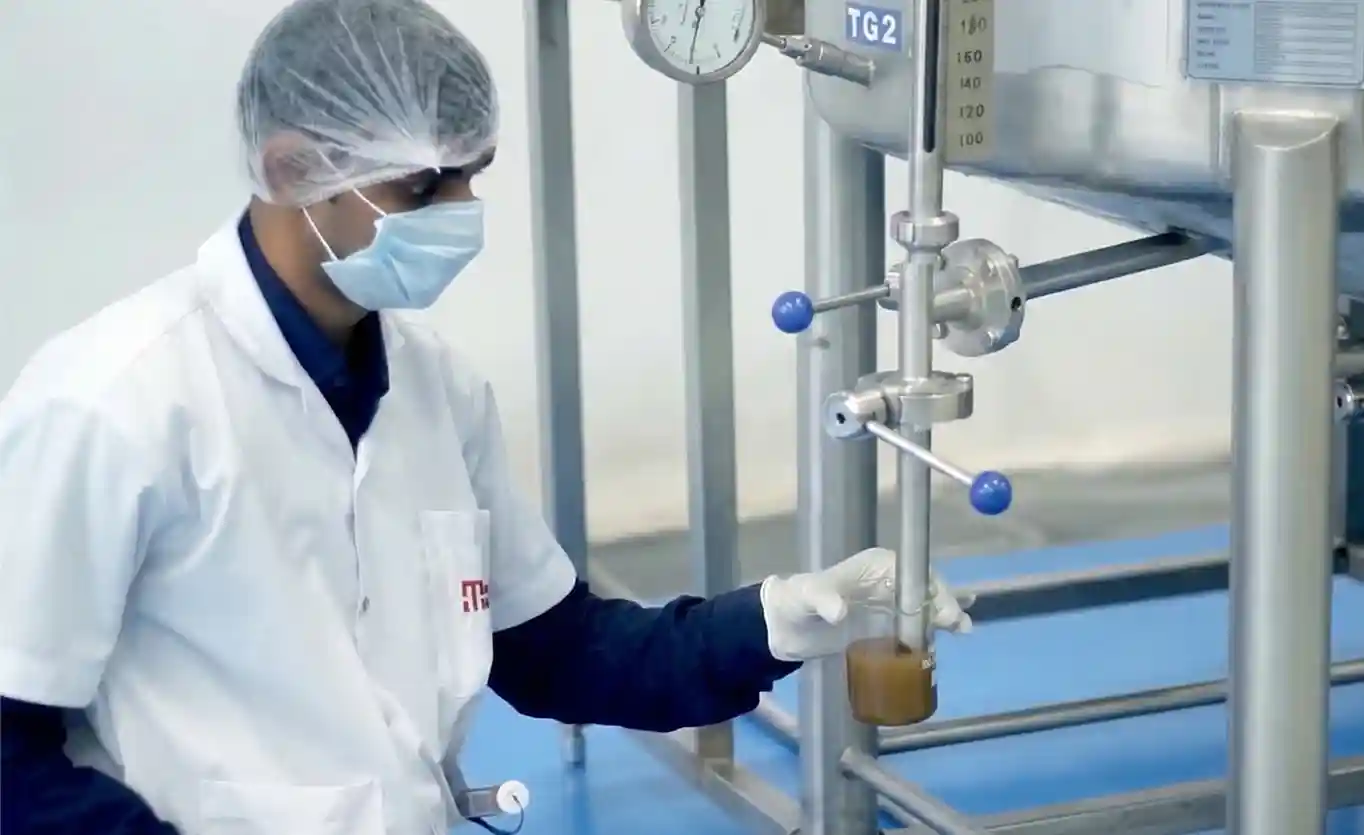
Doctors Analytical Lab, Thane — NABL certified. Not self-declared.
TumGard Plus is a 60-day plant-flavonoid protocol for H. pylori and chronic gastritis. Targets the inflammation, supports mucosal repair. 60-day money-back guarantee.
Start the Protocol → 60-day money-back guarantee · Free delivery across IndiaFounder of Hugg Beverages and principal investigator of the TumGard gut health survey programme. Reviewed this guide for scientific accuracy and editorial consistency.
✓ Verified Certificate — Principles of Biochemistry (edX)The 24% gastritis confirmation rate in TumGard's endoscopy cohort (n=1,111) reflects a self-selected population of people with persistent gut symptoms — not a random population sample. Published endoscopy studies in symptomatic Indian patients report H. pylori-associated gastritis in 40–70% of cases, consistent with the 62% H. pylori positivity seen in the same cohort. The 86% significant finding rate is consistent with evidence that endoscopy in symptomatic Indian patients rarely returns entirely normal results. The 37% rate of suffering for over three years reflects the documented disconnect between acid suppression and mucosal repair — patients managed rather than healed. All flavonoid mechanism claims are grounded in PMC-indexed peer-reviewed literature cited above.